0
0

They get their name from the fabric structure — cross-sections of pleated fabric bonded together to form rows of hexagonal air pockets, like a honeycomb, when viewed from the side.
If you live in a high-rise apartment or a corridor-facing unit in an older HDB flat, you’ll know the struggle: you want natural daylight and airflow, but not at the cost of letting neighbours across the corridor see straight into your living room. That’s where Honeycomb Top-Down/Bottom-Up Blinds come in.
Defined by their crisp, hexagonal fabric cells that trap air like a honeycomb, these blinds do far more than look modern and sleek. After years of installing window treatments across HDB, condo, and landed homes in Singapore, we’ve found they’re particularly effective at cutting the brutal afternoon west sun and softening the rumble of nearby traffic or MRT tracks.
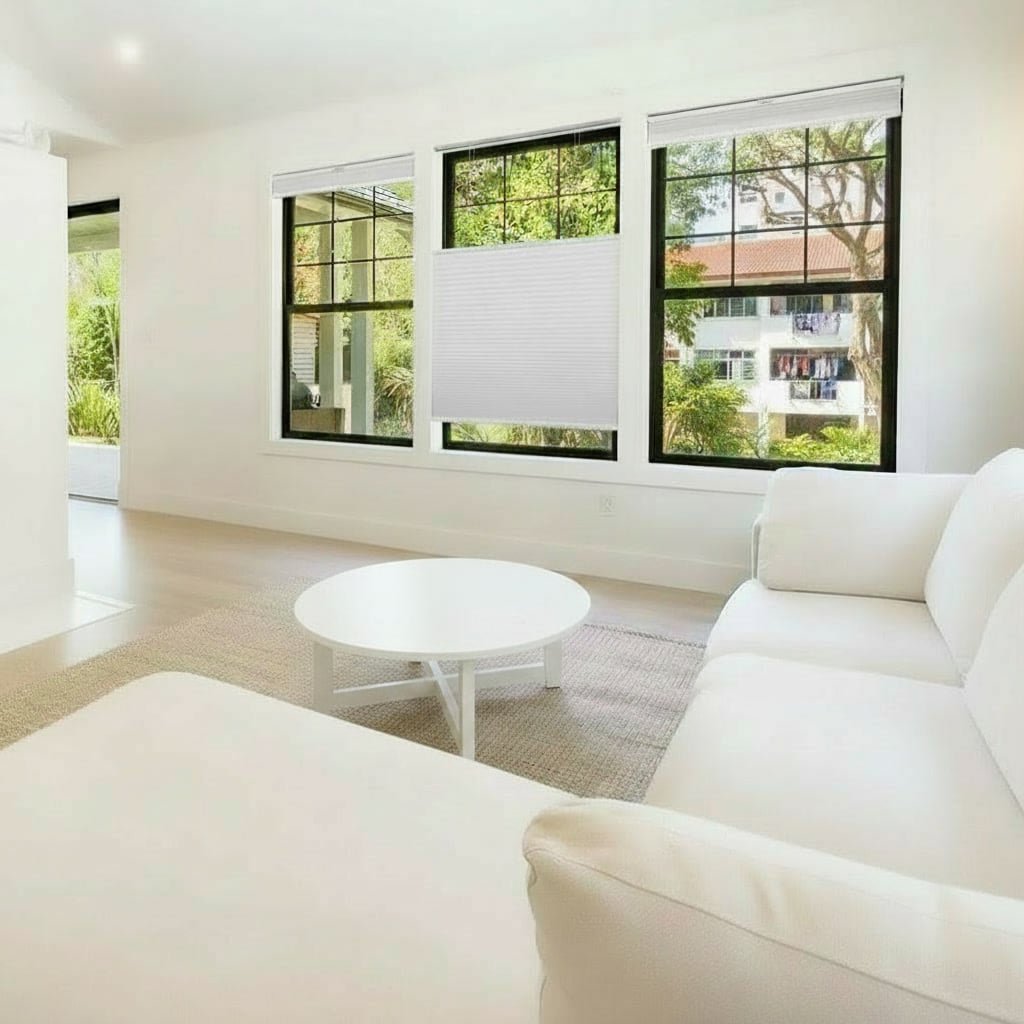
There are light-filtering and blackout options available. Light-filtering fabrics allow natural light to softly diffuse into the room, providing privacy without taking away daylight. They’re perfect for living rooms, kitchens, and home offices. Blackout honeycomb blinds, on the other hand, block nearly all light, making them ideal for bedrooms or kids’ rooms.
Directional Privacy with Top-Down/Bottom-Up
Top-Down/Bottom-Up gives you ultimate directional control. You can drop the blinds down from the top to let sunlight in while keeping the bottom raised to block the view from outside neighbours — especially useful for corridor-facing HDB and condo units. You can also choose to cover just the middle of the window, or cover the top while letting in air, wind, and light from the bottom on a cool, windy day to cut down on electricity usage.
System
Top-Down/Bottom-Up’s defining trait is the hardware and cord system that allows dual-direction movement. You can choose either a dual cord system that lets you handle the top and bottom individually, or a motorised system. Motorised systems are common with honeycomb blinds since the cellular fabric is lighter than most blinds, allowing the motors to last longer relative to other blind types.
Because of the design of the honeycomb fabric, these blinds have a small profile and don’t need a lot of space, allowing them to be installed in tighter spaces that some other blinds can’t fit into. This also gives them a clean look.
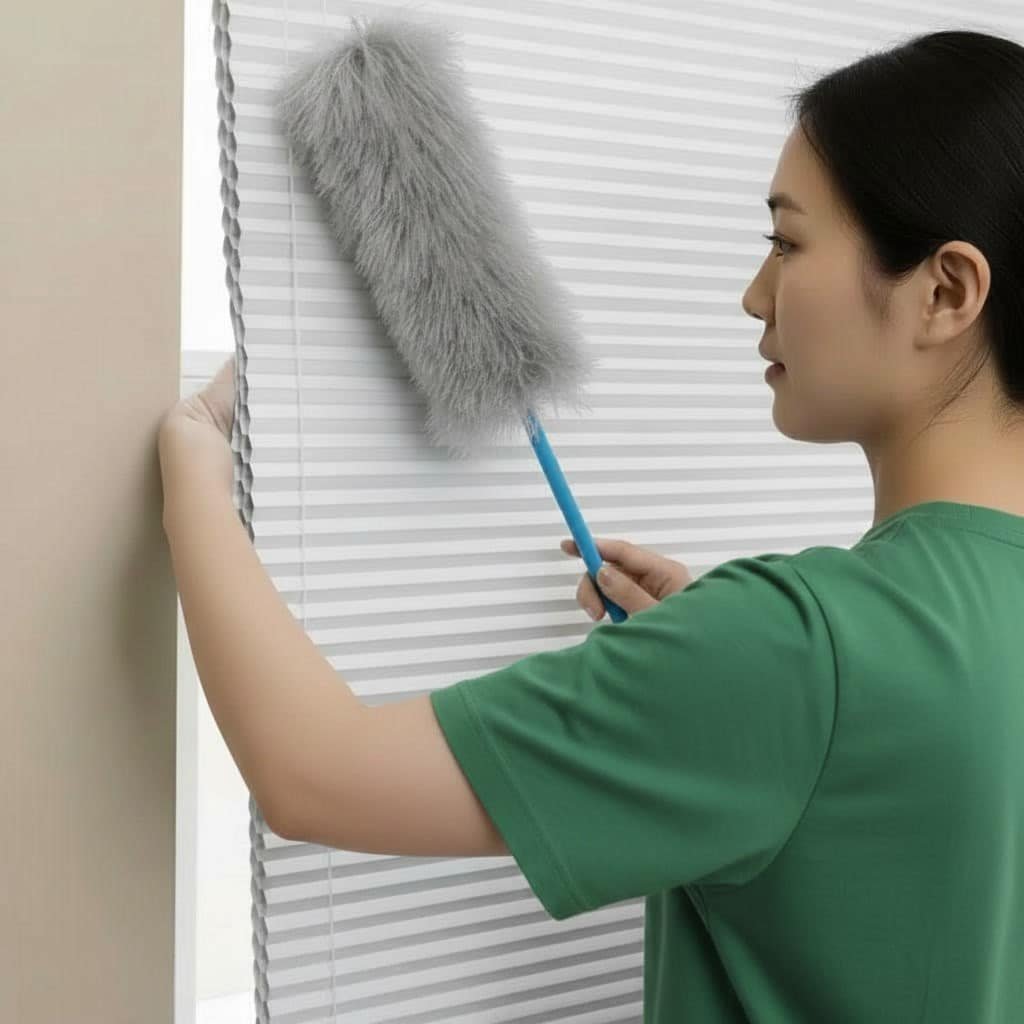
Maintenance usually involves:
They typically cost around $15 per square foot, depending on the type of material you choose.
Yes, blackout material is available for honeycomb blinds. Do note that even with blackout fabric, some light can still come in from the sides of the blind.
Yes, they're available with a Top-Down/Bottom-Up system, using two separate cords to control the top and bottom independently.