0
0

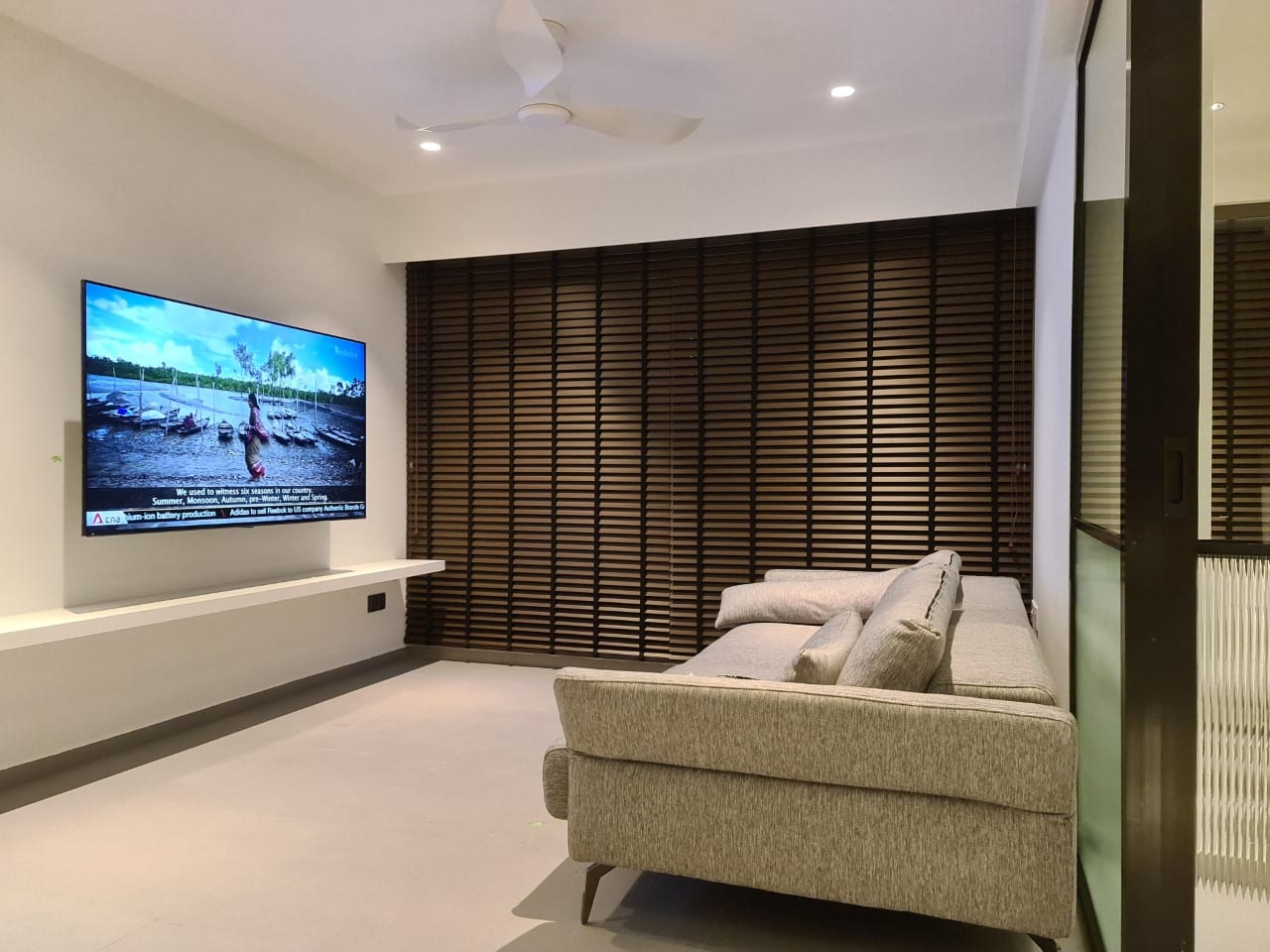
Venetian Blinds are like a timeless piece of art enhancing the character of any room. Also known as horizontal blinds, their popularity has spanned centuries, adapting to evolving tastes while retaining their core appeal in both homes and offices. Unlike roller blinds, their defining feature lies in the ability to tilt the slats, allowing for adjustments to the amount of light entering a room and the level of privacy desired, as well as the capacity to be raised and lowered entirely.
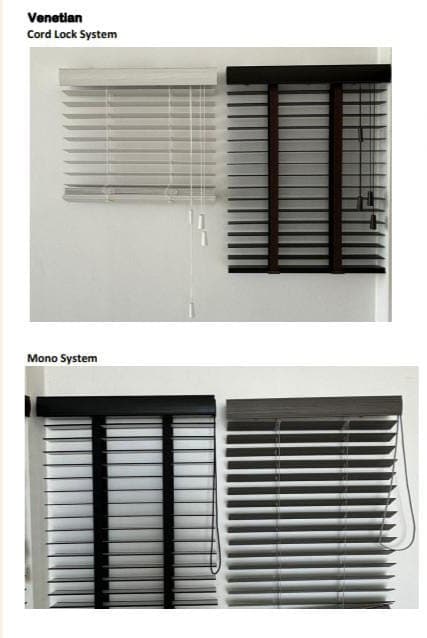
Cord Lock
Lifting and Lowering:
To lift the blind, tilting the cord strings to the pulley direction at a 25 degrees angle to release the lock mechanism and pulling the cord strings allows you to lift the blind causing the slats to stack neatly at the top. The cord lock typically engages automatically when you stop pulling.
To lower the blind, tilting the cord strings to the opposite direction from pulley strings releases the lock mechanism, carefully let the cord slide through your hand to allow the blind to descend smoothly. Once the desired height is reached, tilting the cord towards the mechanism edge re-engages the lock, holding the blind securely in place.
Tilting the Slats:
Adjusting the angle of the slats for light and privacy control is managed by a separate tilt cord, also housed in the headrail. Pulling one cord tilts the slats upwards while pulling the other tilts the slats downwards.
Mono System
A mono control system for Venetian blinds operates using a single continuous loop cord, often made of nylon. Pulling one side of the loop tilts the slats upwards first; continuing to pull that same side after the slats reach their limit will then raise the blind. Pulling the other side of the loop will first tilt the slats downwards and then, with continued pulling, lower the blind.
PS/PVC
Polystyrene, a lightweight and moisture-resistant plastic that is more durable than wood. Unlike real wood, polystyrene can endure constant water exposure without warping or fading, making it highly suitable for humid areas such as toilet windows, and often features artificial grains for a wood-like appearance.
Wood
Though real wood Venetian blinds provide a certain level of heat insulation, which can contribute to energy savings, they often come with a premium price tag, and their susceptibility to warping, discoloration, and other damage from Singapore’s consistently high humidity make them a less practical and potentially more costly option to maintain.
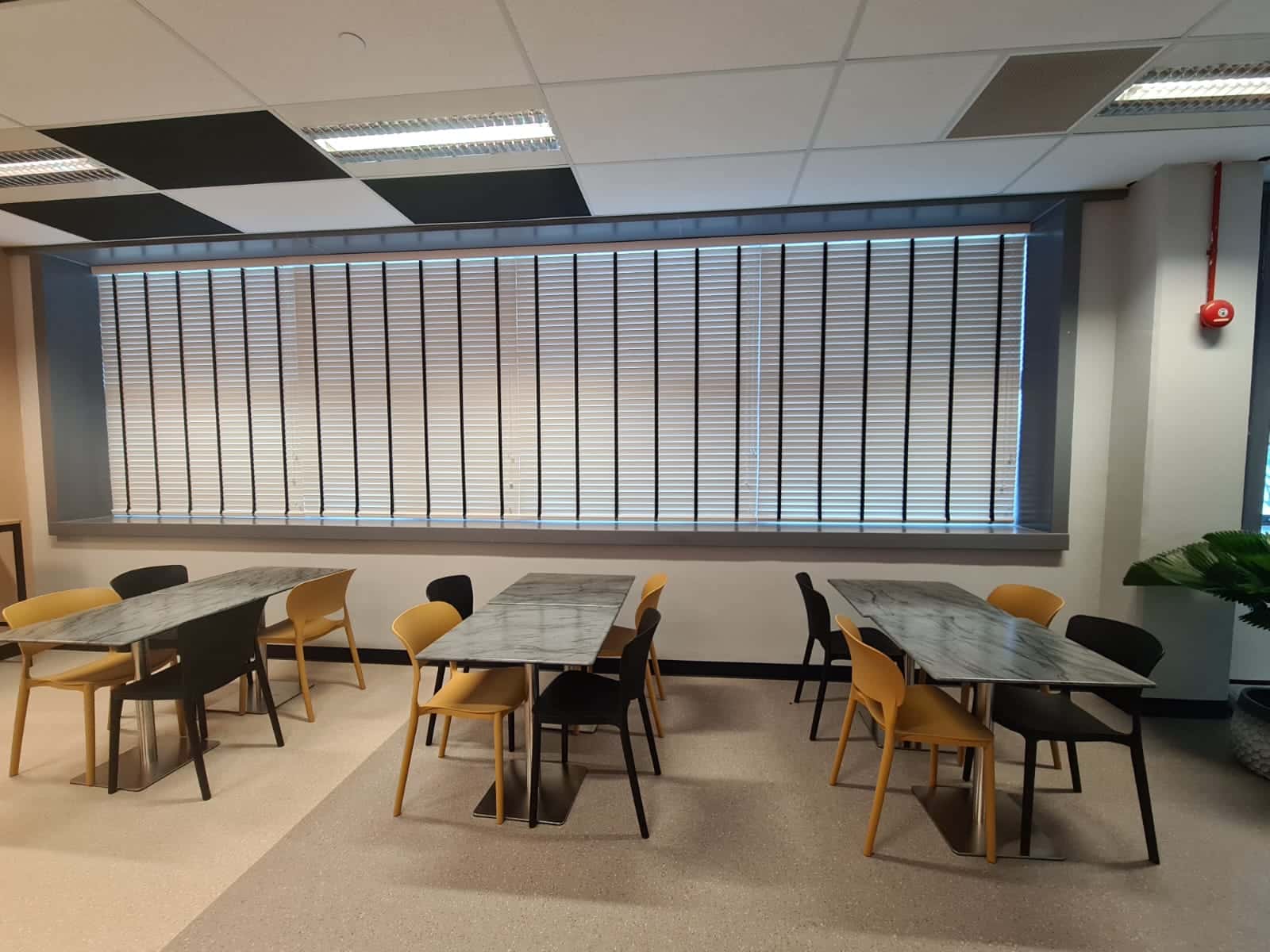
Aluminum Venetian blinds are an excellent choice for areas with limited mounting space due to their lightweight and slim design, which allows them to fit easily into narrow spaces, and they are available in a wide variety of colors.

A little planning goes a long way before you decide how your blinds will be mounted. Over our 13 years working with blinds, we’ve seen the same problems come up time and again—and most of them are completely avoidable. Let us walk you through what to look out for before you get started.
Why getting the fit right matters
When blinds are sized and mounted correctly, they look like they were always part of the room, not something thrown up just to cover the windows. That’s the difference between blinds that look tailored to your home and ones that just hang there.
It’s not complicated, but it does take a bit of know-how. That’s exactly what we’re here for.
The Two Most Common Mounting Situations in Singapore
Most HDB windows have a concrete beam sitting directly on top of the window frame. In this case, we normally recommend a ceiling mount, fitting the blinds directly under that beam.
Before you measure, check for any window handles or grilles. You want to make sure the beam is deep enough to clear those handles and still have enough room to fit the brackets. Keep in mind that Venetian blind headrails are typically about 2.5 inches wide.

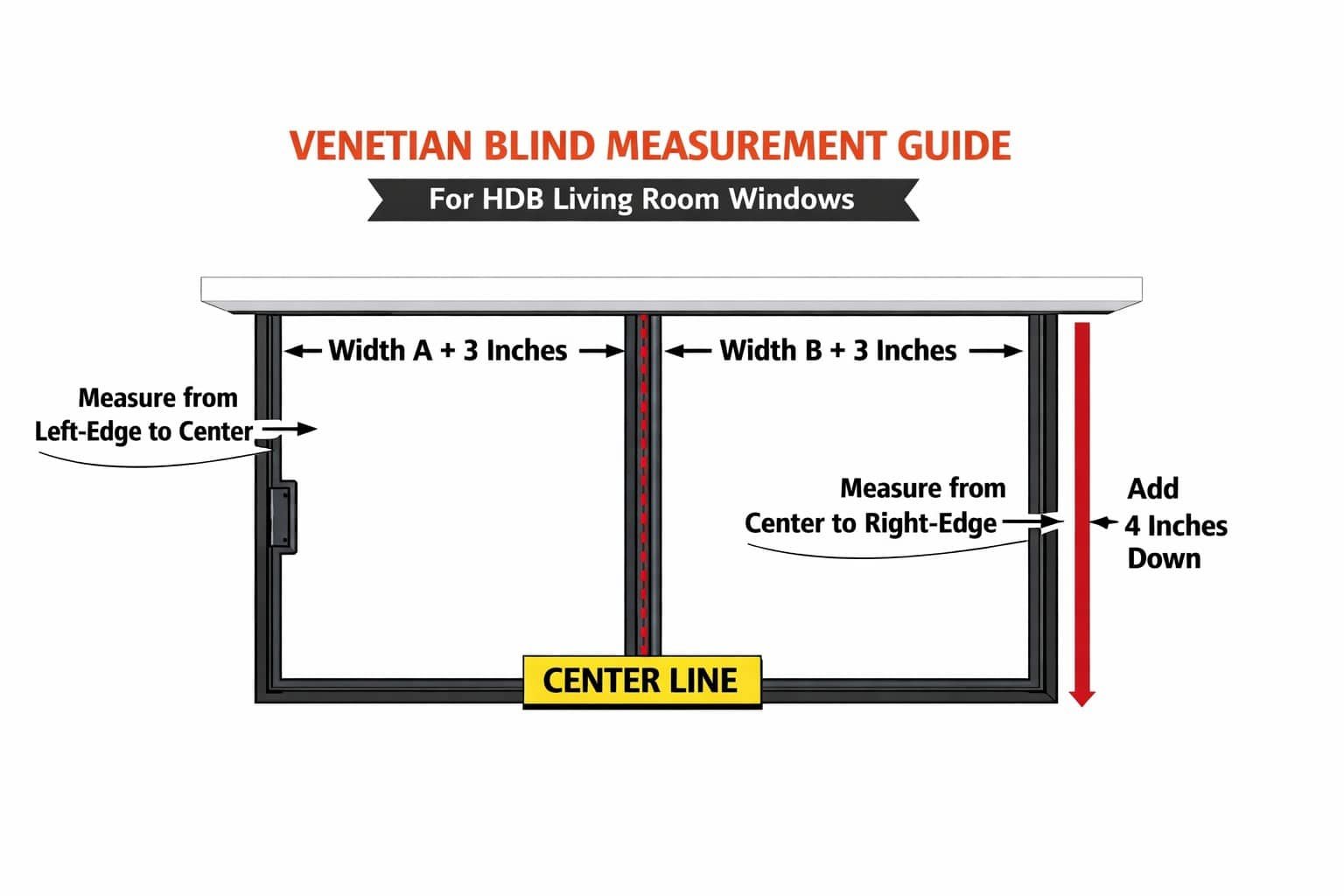
Living room windows in HDB flats are usually too wide for a single blind, so we split them into two separate units. Here is how to measure:
Bedroom Windows
A single blind is usually enough for bedroom windows.
Height for Both (Living Rooms & Bedrooms)
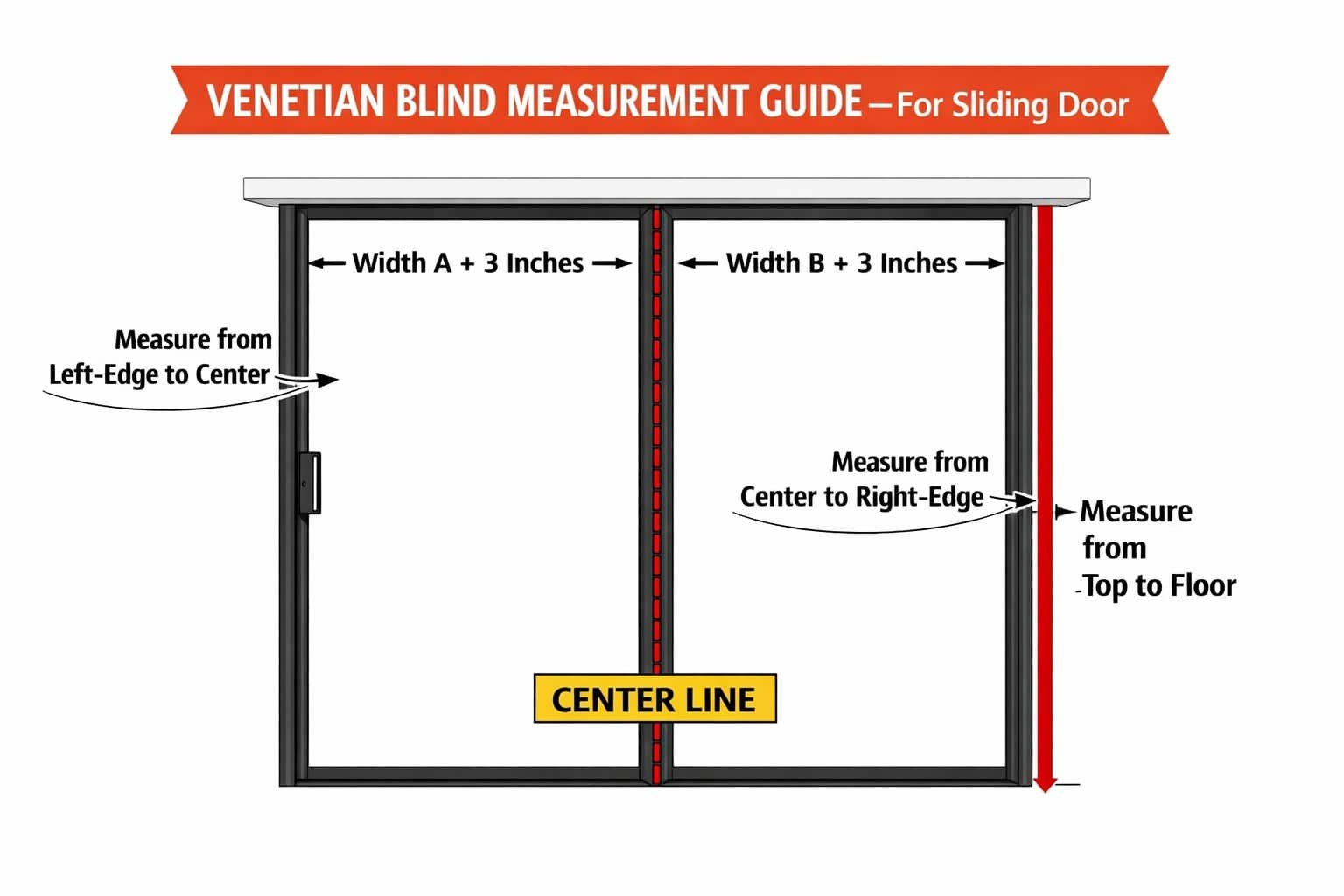
Most condos and landed properties feature full-height sliding glass doors in the living areas. Measuring works similarly to windows, but there are a few design layout choices to think through first.
If you have a wide sliding door that runs wall-to-wall, you’ll need to decide how to divide the blinds. For example, if you have a 6-panel sliding door layout, you have two great options:
Go with whatever works better for how your room looks and how you naturally walk through the doors.
Measuring the Width
Measuring the Height
Pro-Tips for a Perfect Fit
A few minutes spent measuring properly saves you the major headache of ill-fitting blinds. When in doubt, don’t guess! Reach out to our team with a quick photo of your windows—we’re always happy to help you get it right.
Wooden blinds are generally lighter in weight but not as strong or as easy to maintain compared to PVC ones. As wood is a natural material, the quality can vary — whereas PVC is man-made, making it easier to produce consistently. PVC slats can also withstand regular cleaning with water, while wooden ones will tend to deteriorate if exposed to moisture.
PVC is the better choice for both bathrooms and kitchens. Bathrooms are frequently wet environments, and PVC handles moisture much better than wood. For kitchens, heavy cooking tends to leave grease and oil on surrounding surfaces, including blinds — and PVC's superior resistance to water and residue makes it much easier to clean.
For wooden blinds, we recommend cleaning with a brush or a duster. For PVC blinds, you can also use a brush or duster, or even wipe them down with water.
Venetian blinds are low-maintenance. In fact, if you use them with care, there is not much you need to do to keep them in good condition.