0
0

Originating in South Korea, Korean Blinds, also known as Combi Blinds, Rainbow Blinds, or Dual Shade Blinds, represent a stylish and practical upgrade in window treatments. Their distinctive dual-layer fabric with alternating sheer and opaque nettings has led to a surge in popularity in Singapore. This unique design offers exceptional flexibility in controlling light and privacy compared to standard roller blinds, making them a popular choice for bedrooms and living rooms. The sheer layer can be lowered to allow natural light to filter into the room, while the opaque layer can be raised to block out light and ensure privacy. Available in a wide array of colors and styles to complement any home décor, they are easy to operate and adjust to meet your specific needs, providing a great option for both letting in natural light and blocking out the sun.

Dim-out Korean blinds offer a stylish and functional window treatment solution that balances natural light and privacy, they feature alternating horizontal panels of sheer (nettings) and opaque fabric. In these blinds, the opaque sections are designed primarily to filter light rather than completely block it. By adjusting the alignment of the opaque panel, you can increase privacy and reduce incoming light, typically achieving between 40% and 90% blockage, although the exact amount varies depending on the specific fabric and color chosen. Darker fabrics will naturally provide greater light reduction. This makes Dim–out materials Ideal for spaces like living rooms, dining areas and studies.
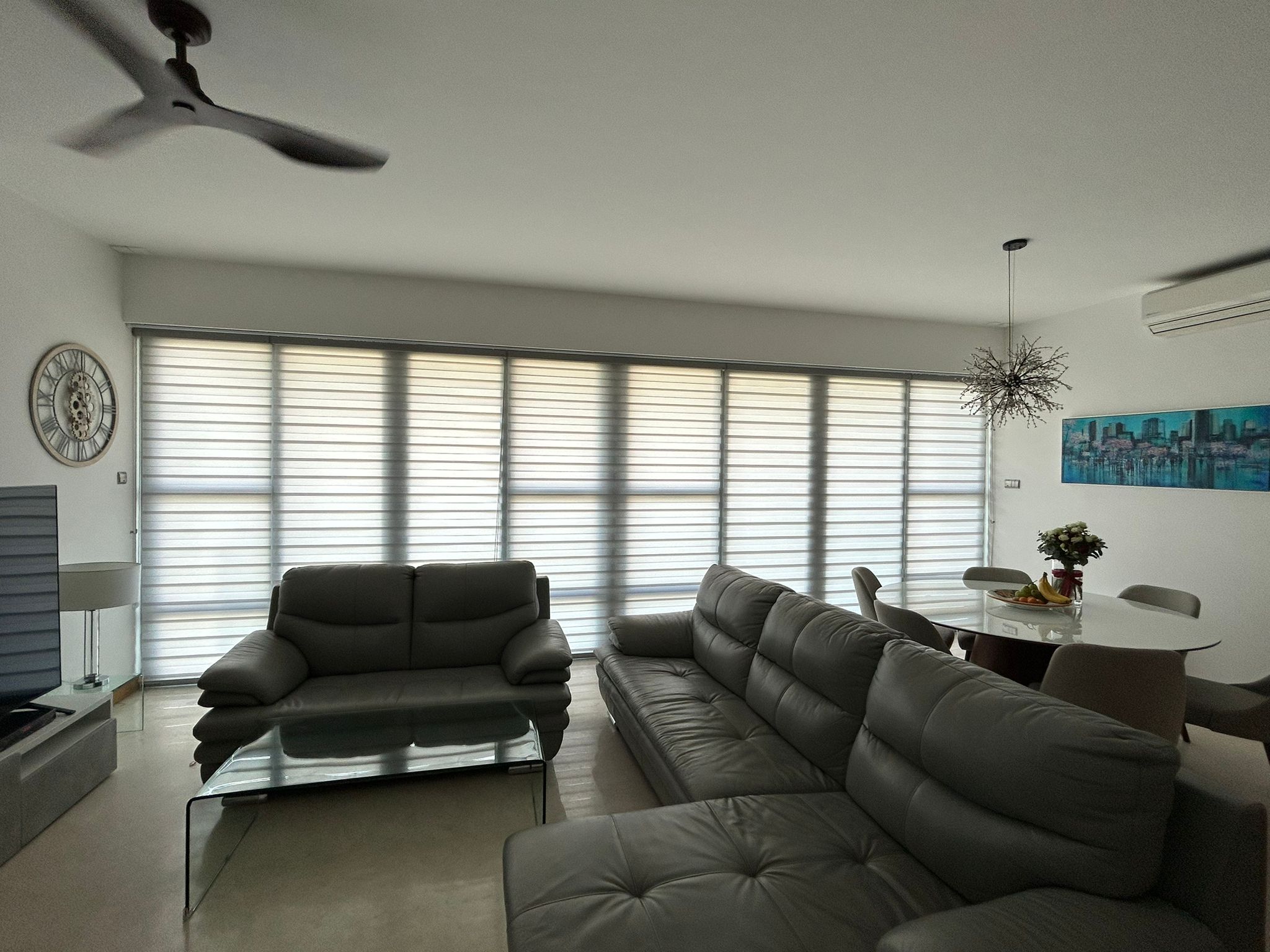
For those seeking darkness and privacy, blackout Korean blinds offer an effective and stylish solution. The opaque fabric used in blackout versions is specifically designed to block a significantly higher percentage of incoming light.
By adjusting the alignment of the sheer(nettings) and blackout panels, users can transition from light filtering to near-complete darkness. When the blackout sections are fully aligned, they typically block between 80% and 99% of light, creating a darkened environment ideal for bedrooms, nurseries, or media rooms where minimal light is crucial for sleep or screen viewing.
It’s important to note that due to the dual layer structure, minor light seepage might occur around the edges or between fabric layers, meaning they provide significant room darkening rather than 100% blackout.

Proper care keeps your blinds looking new for years. As a local installation team, we’ve seen what happens when these are handled incorrectly.
One of the most common installation mistakes we see with Korean blinds is improper levelling. Most ceilings—especially in older HDB flats and condos—aren’t perfectly straight. If the blind isn’t levelled correctly, the fabric will gradually shift to one side when you operate it. Eventually, this causes the material to get caught in the pulley gear, which leads to fraying and tearing.
Because of the delicate structure of Korean combi blinds, you need to be careful with maintenance:
To prolong the lifespan of your blinds:
How to Measure Windows for Blinds in HDB Flats and Condos (Ceiling-Mounted Windows)
Measuring the Height
Measure from the underside of the ceiling or beam down to the bottom edge of the window frame.
Add 4 inches (approximately 10 cm) to this figure.
This extra length allows the blind to sit slightly below the bottom of the window frame when fully lowered, preventing light from bleeding through the gap at the base — particularly noticeable in the early morning when the sun is low.
Example: If the distance from the beam to the bottom of the window frame is 50 inches, order your blind at 54 inches in height.
Measuring the Width
Measure across the full width of the window, from the outermost left edge of the frame to the outermost right edge.
Add 3 inches on each side (6 inches total) to this figure.
With clear wall space on both sides, the blind can extend 3 inches beyond each edge of the window frame, blocking the slivers of light that would otherwise slip through at the sides.
Example: If the window frame measures 50 inches across, order your blind at 56 inches in width.
Why These Allowances Matter in Singapore Homes
Singapore’s high-rise environment means direct sunlight hits windows at steep angles throughout the day, especially in east or west-facing units. A blind sized exactly to the frame will almost always let light through at the edges and base. For bedrooms where complete block-out is the priority, consider increasing the width allowance to 4 inches per side for a tighter seal.
Quick Reference
|
Measurement |
What to Measure |
Add |
|---|---|---|
|
Height |
Ceiling or beam to bottom of window frame |
+ 4 inches |
|
Width |
Left edge to right edge of window frame |
+ 3 inches per side (6 inches total) |
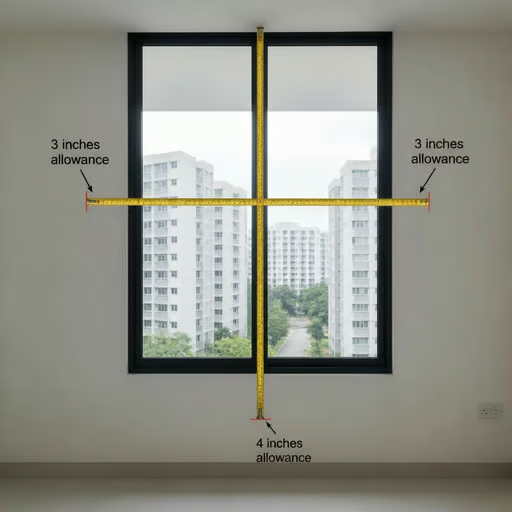
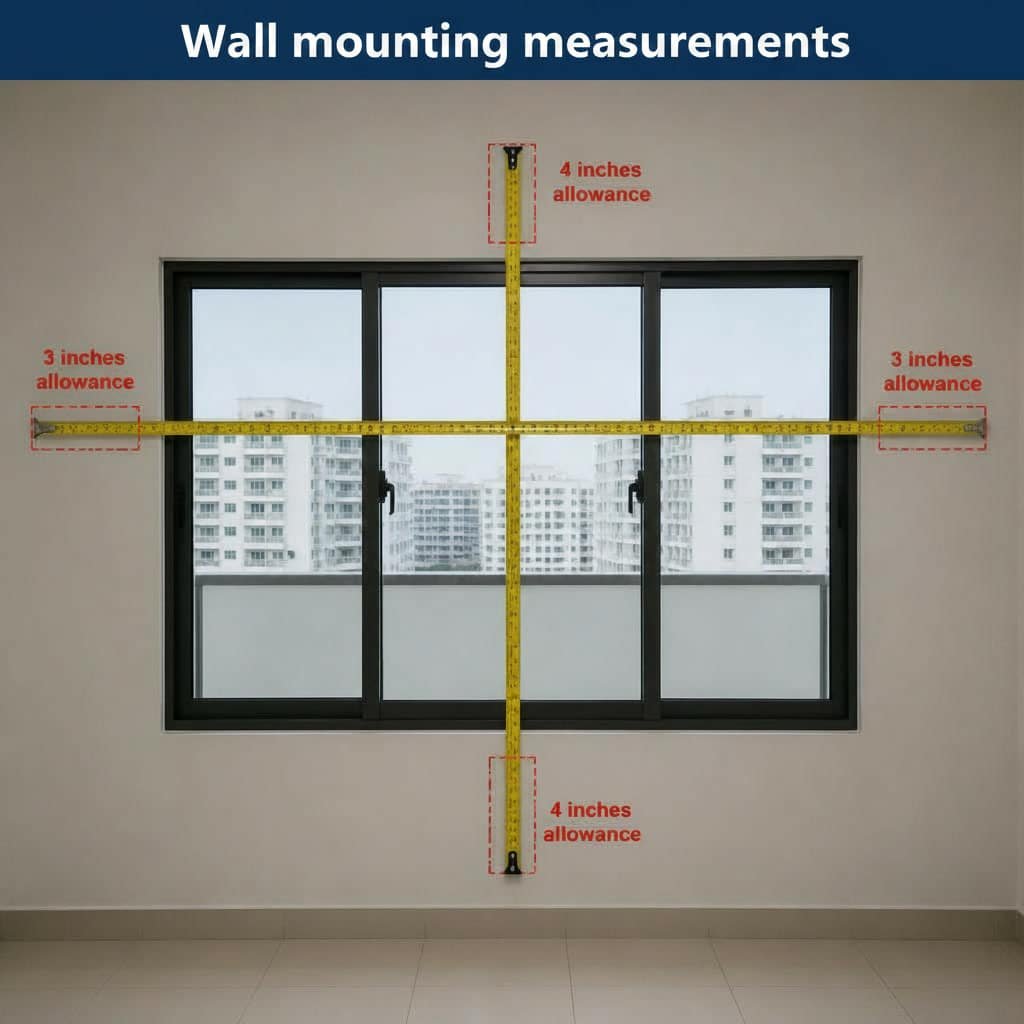
This guide covers windows that sit lower on the wall with a noticeable gap between the top of the window frame and the ceiling. For this configuration, the blind bracket is fixed directly onto the wall above the window — this is referred to as wall mounting.
Measuring the Height
Start your measurement 4 inches above the top of the window frame and measure straight down to 4 inches below the bottom of the window frame.
The 4-inch allowance at the top positions the blind above the window frame, ensuring the rolled-up portion does not block the glass when the blind is raised. The 4-inch allowance at the bottom prevents light from bleeding through the gap between the base of the blind and the window sill when fully lowered.
Example: If the window frame height is 50 inches, order your blind at 58 inches in height (50 + 4 + 4).
Measuring the Width
Measure across the full width of the window, from the outermost left edge of the frame to the outermost right edge. Add 3 inches on each side.
Example: If the window frame measures 50 inches across, order your blind at 56 inches in width.
Quick Reference
|
Measurement |
What to Measure |
Add |
|---|---|---|
|
Height |
4 inches above frame to 4 inches below frame |
+ 4 inches top, + 4 inches bottom |
|
Width |
Left edge to right edge of window frame |
+ 3 inches per side (6 inches total) |
If there is anything that you are unsure of, feel free to contact us via WhatsApp.
Yes, Korean/Combi blinds are generally more expensive than roller blinds. The combination of opaque fabric and sheer netting makes them more complex, and there are also more mechanical components involved compared to a standard roller blind.
Yes, Korean/Combi blinds can provide privacy at night even without blackout material. When the blinds are adjusted to the opaque section, people outside will generally not be able to see through, though they may still see faint shadows if you are standing very close to the blinds.
Yes and no. Yes, they are durable if your window does not receive strong direct sunlight and if you remember to pull them up or close the windows during strong winds. No, if the blinds are exposed to strong direct sunlight, as the heat can cause the fabric and netting to become brittle over time and eventually break.
The best way to clean Korean or combi blinds is to use a duster. Avoid using water or a wet cloth, as it may damage the material. Improper cleaning can also cause the netting to weaken or tear.